
| Technical Feature | Value and Unit | Technical Description |
|---|---|---|
| Polymer Material Density | 0.90 to 1.45 g/cm³ | Depends on polymer type (PP lighter, PC heavier) |
| Melt Flow Index (MFI) | 2 to 25 g/10 min | Determines melt fluidity and controls viscosity in injection process |
| Injection Temperature | 180 to 280°C | For complete polymer melting and precise mold filling |
| Mold Temperature | 30 to 90°C | Controls cooling rate and prevents part shrinkage |
| Injection Pressure | 600 to 1400 bar | Pressure required for complete mold filling |
| Injection Time | 1 to 5 seconds | Duration of mold filling with melt |
| Cooling Time | 5 to 40 seconds | Depends on thickness and polymer type |
| Post-Molding Shrinkage | 0.3 to 1.8 percent | Highest in PP, lowest in PC and ABS |
| Tensile Strength | 30 to 80 MPa | Part strength against tensile force |
| Impact Resistance | 5 to 60 kJ/m² | Energy absorbed before fracture |
| Surface Hardness | 70 to 90 Shore D | Surface resistance to pressure and scratches |
| Heat Deflection Temperature (HDT) | 80 to 140°C | Part stability range at high temperatures |
| Water Absorption | 0.01 to 1.5 percent | Depends on material type (PA higher, PP lower) |
| Linear Thermal Expansion Coefficient | 80 to 200 μm/m/°C | Determines length change due to heat |
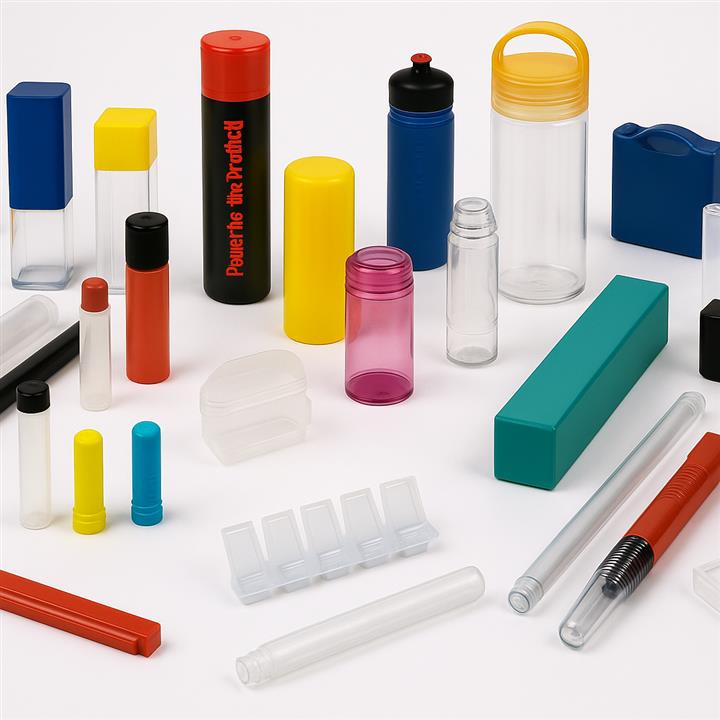
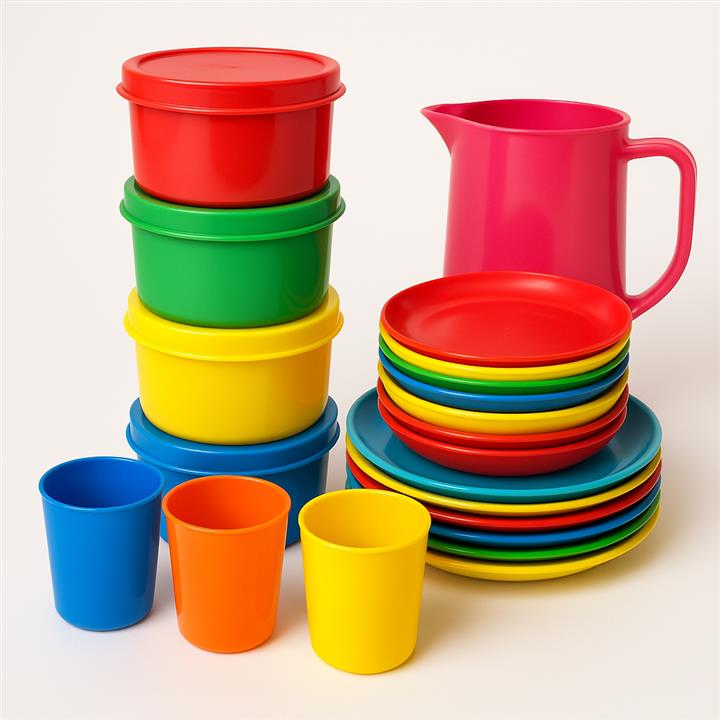
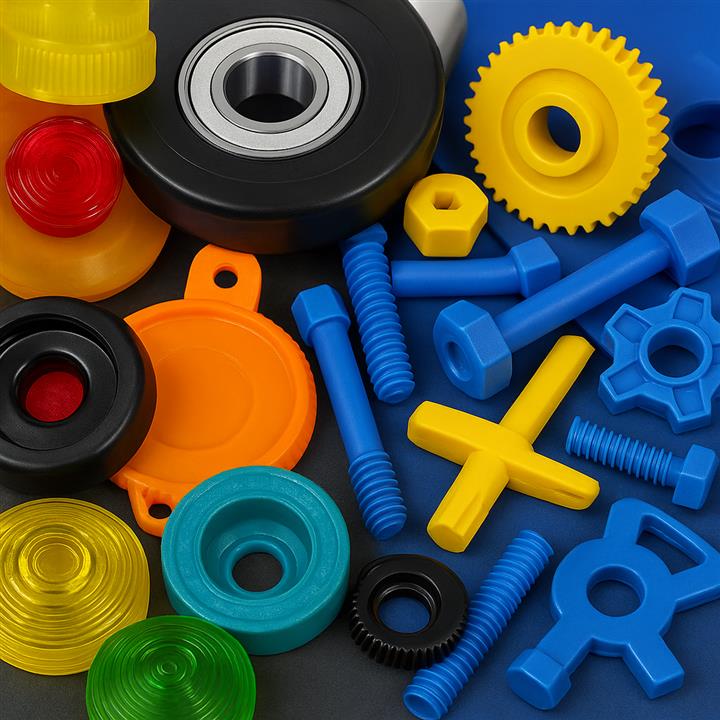
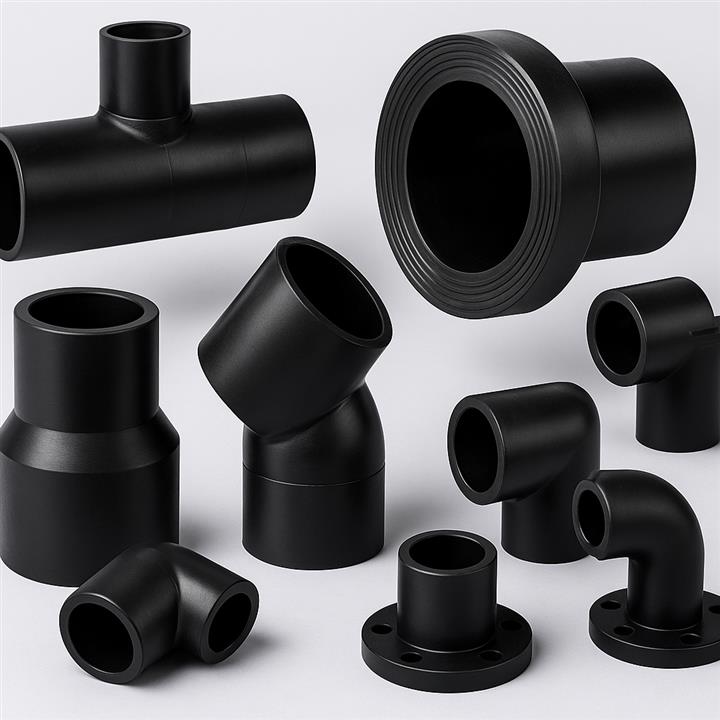
Plastic injection products include industrial and mechanical parts, automotive parts, OEM parts, construction and installation parts, and agricultural and irrigation parts. These products are used to produce items such as industrial fittings, car bumpers, construction equipment, irrigation systems, precision machinery parts, and more.
The production process is based on melting and injecting polymer materials into metal molds to create precise, lightweight and durable parts. Annually, the expansion of production of these parts plays an important role in advancing industries, reducing production costs and making human life easier.
Plastic injection products are used annually in various industries to produce diverse products with different applications. Below we explain more about the applications of these products in different industries.
In the automotive industry, plastic injection products are used to make parts such as bumpers, light casings, dashboards, gear shifts and decorative interior components. These parts are usually made of polypropylene (PP) and ABS and help reduce vehicle weight, improve appearance and save fuel consumption.
In this industry, plastic injection plays a vital role in the production of syringes, medicine caps, test tubes, masks and medical device parts. The use of polycarbonate (PC) and polypropylene (PP) ensures sterility, transparency and safety of these products. These parts are used in hospital equipment and pharmaceutical packaging.
In the packaging industry, injection molded parts such as bottle caps, shampoo bottles, food containers and cosmetic packaging are produced. These products are made of polyethylene (PE) and polypropylene (PP) and are responsible for maintaining freshness, preventing leakage and extending product shelf life.
In this sector, plastic injection is used to make charger casings, phone cases, switches and sockets, surge protectors and internal components of electronic devices. Polycarbonate (PC) and nylon (PA) are the main materials that contribute to insulation, heat resistance and safety of these parts.
In the construction industry, injection molded products include pipe fittings, fasteners, handles, switch and socket frames, covers and plastic nets. These parts are usually made of PVC and polyethylene (PE) and are used in plumbing, electrical and interior decoration systems.
In agriculture, injection molded parts such as plastic valves, drippers, nozzles and irrigation fittings are made of polyethylene (PE). These parts are resistant to moisture and sunlight (UV) and are designed for pressurized irrigation systems and greenhouses.
Plastic injection is used in the production of bins, lids, food storage containers, appliance parts and household product casings. Polypropylene (PP) and ABS have the highest consumption and contribute to lightness, durability and attractive appearance in products.
In the production of parts such as bicycle handles, safety equipment, lightweight sports parts and recreational equipment, plastic injection materials like TPU and TPE are used. These parts are flexible, impact-resistant and suitable for outdoor use.
The use of plastic injection products after recycling is an effective method to reduce production costs and protect the environment, which has a special place in various industries. Below are the advantages of using plastic injection products:
Lightweight and easy transportation compared to metal parts
High strength against impact, pressure and temperature changes
Ability for mass production with very high dimensional accuracy
Lower production cost compared to metal or casting methods
Wide variety in color, shape, surface texture and final appearance
Excellent resistance to moisture, corrosion and chemicals
Ability to use recycled materials and environmental compatibility
Long service life and low maintenance requirements
Short production time and high productivity in production lines
Possibility of adding special additives such as UV-resistant, flame-retardant or wear-resistant
The final price of plastic injection products depends on factors such as raw material type, design complexity, part weight and production volume. The more engineering materials like polycarbonate or ABS are used or the part mold has more precise details, the manufacturing cost increases.
In addition, energy costs, injection time, packaging and quality control also affect the final price. In mass production, the cost per part decreases, but in low volume, the total cost will be higher. In general, a smart combination of material selection, mold design and production management can optimize and keep the price competitive.
Please enter your information so we can contact you as soon as possible




نظرات